REPORTED COMPLETED · 27 MAY 2026Industrial land conversion
13,500 m² project area for biofertiliser and biogas use.
Haritika Group · Rural circular economy
Our first priority is Tejomay's proposed 5 TPD compressed-biogas plant in Bharatpur, Rajasthan—connecting renewable fuel production with local feedstock demand, rural work and nutrient recovery.
Illustrative rural vision · The Jatmasi plant is in development
First asset · Jatmasi, Bharatpur
Tejomay is advancing engineering, feedstock contracting, approvals, definitive offtake and financial closure. Construction and commercial operations remain ahead.
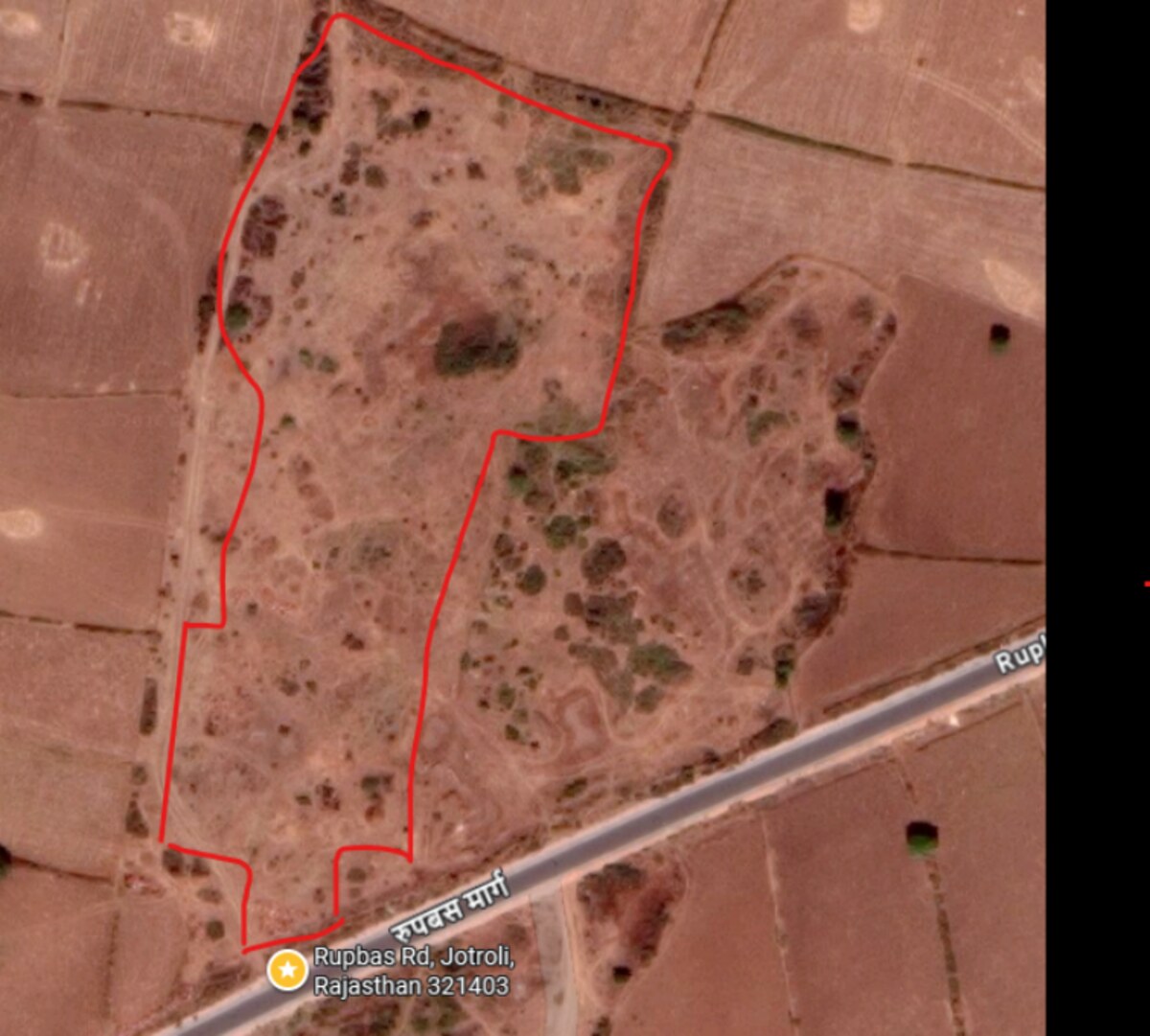
Applicant-supplied satellite view. The formal land-conversion plan governs the legal boundary and area.
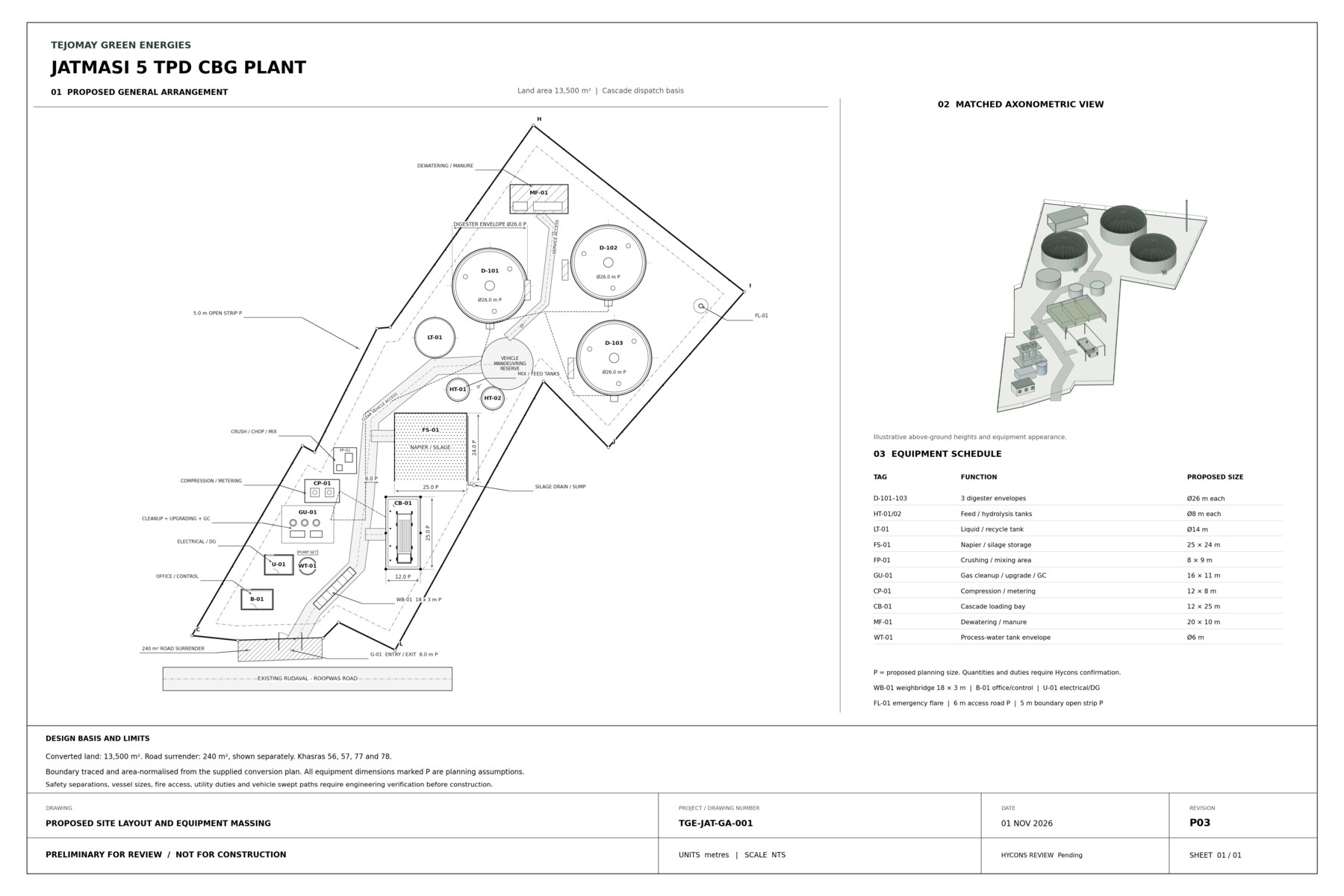
Proposed equipment massing for review. Detailed engineering and safety validation remain open; this drawing is not for construction.
13,500 m² project area for biofertiliser and biogas use.
Prepared for GOBARdhan resubmission; assistance remains conditional.
Align equity, lender appraisal, EPC, supply, offtake and required approvals.
How the business is intended to work
The proposed plant connects a feedstock supply chain to clean fuel sales and potential nutrient-product revenue. Contracting and operating performance will determine the economics.
Predominantly Napier grass with manure inputs. The current planning basis is 35,400 tonnes annually; allocation, delivered costs and supply contracts remain in development.
Planned saleable nameplate output of 5 tonnes per day. GAIL is the intended route to market; definitive plant-level offtake and delivery arrangements remain to be concluded.
Potential bio-fertiliser products provide a second value pathway, subject to processing, product quality, applicable requirements and customer demand.
The proposed financing combines promoter commitment, external equity and secured project debt. Future plants require separate appraisal and funding. Detailed terms are shared privately.
Why Haritika exists
Reliable local demand and skilled work can give families more choice about where to build their future. Plant 1 starts with practical economic activity around the resources villages produce.
Haritika's ambition to improve 20 million lives is a long-term goal across a future network of ventures. Local jobs, supplier income and environmental outcomes will need measured baselines and operating evidence.
Napier cultivation, harvesting and manure procurement can create recurring local business, subject to workable supply agreements.
Collection, transport, operations, maintenance and services create pathways for rural participation.
Digestate processing can return useful nutrients to agriculture while creating another local service and product pathway.
People behind the project
Nitesh Kumar Sharma · Founder, Tejomay Green Energies
A Bharatpur native and Netherlands-based technology professional, Nitesh leads capital formation, partnerships and the project development process. The first-plant programme brings together engineering, feedstock, offtake and financing workstreams.
Hycons is the prospective EPC adviser. Final scope, engineering acceptance, performance commitments and appointment remain part of project diligence.
Haritika Group ventures
The ventures have distinct operating models. Tejomay Plant 1 is the current capital-formation focus.
Proposed 5 TPD CBG project at Jatmasi, Bharatpur. Establishing the first operating asset is the immediate objective.
Long-term ambition: a five-plant Rajasthan portfolio. Each future plant needs its own site, permissions, appraisal and funding.
A proposed farmer-linked fresh-food business, beginning with a Jaipur market model and a rural collection backbone.
Its development and financing are separate from Tejomay Plant 1.
Explore the food-system modelRead the CBG policy analysis and how conditional support relates to the project.
Start with the project
Read the public overview, explore a partner path or arrange a founder conversation.